Why Your Cold Outreach Reply Rate Is Falling — and the Personalisation Move Everyone's Missing

Average B2B cold email reply rates have fallen to around 3.4% in 2026, down from 8.5% a few years ago. The standard fix — signal-based personalization — is now table stakes, and it's stopped being a differentiator. There's one variable almost no one optimizes: not what's true about your prospect, but how your prospect decides. This post explains decision-aware messaging, why it lifts reply rates, and how to run it across your whole list instead of one message at a time.
The reply rate problem isn't going away
If your team's outreach is converting worse than it did two years ago, the data says you're not imagining it. Cold email reply rates have been falling for years — the 2026 benchmarks put the average somewhere between 3% and 5%, down from the 8%+ that used to be normal. Inboxes are saturated, filters are stricter, and buyers have trained themselves to ignore anything that smells like a template.
The usual advice is, by now, a checklist everyone has already run: fix deliverability, keep emails under 80 words, send Tuesday to Thursday, follow up three times, reference a trigger event. It's all correct. It's also all table stakes — the floor, not the edge. When every competent team is doing the same things, doing them slightly better is a game of diminishing returns.
So here's the more useful question: if the offer is good and the targeting is tight and the email is short — why does the same message still land with one prospect and bounce off the next?
Same message, two results — and the reason has nothing to do with the offer
Most outreach treats everyone who fits the title the same way. Same template, same hook, same order of arguments — fired at a list. It works often enough to keep doing it, and badly enough that everyone's quietly frustrated with their reply rate.
Here's the thing that actually moves the number: people don't decide the same way, so they don't read the same way.
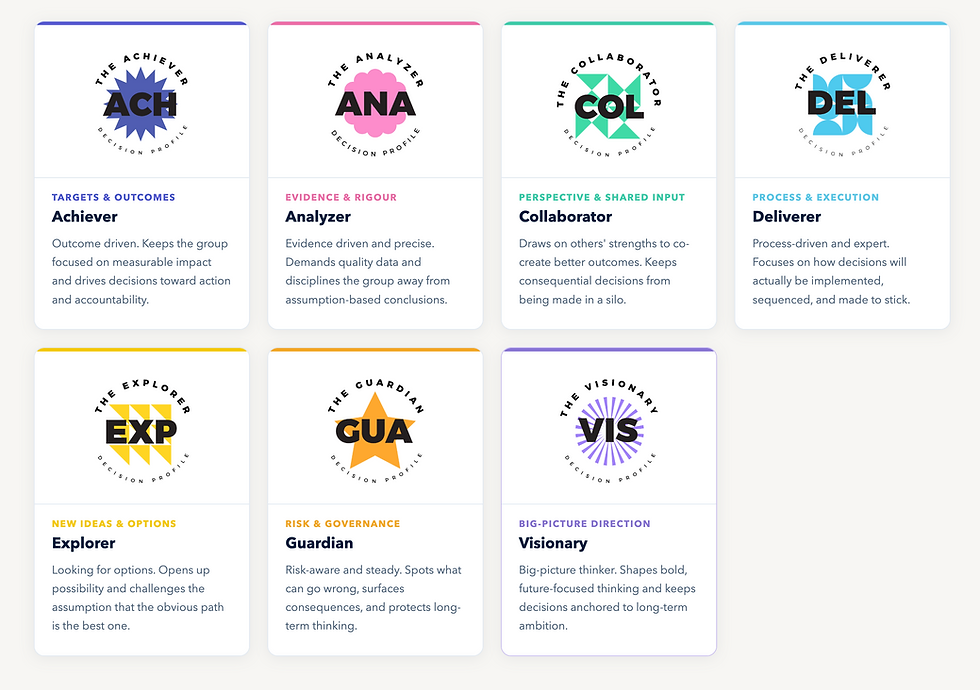
One prospect scans your message for the outcome — what do I get, how fast. Another is hunting for proof — where's the evidence, what's the data. A third is reading for risk — what's the catch, what could go wrong. Send all three the same paragraph in the same order and you land cleanly with one and create friction with the other two. Same offer. Same words. Different result, for a reason that has nothing to do with the offer.
This is the variable nobody's optimising. The whole industry has converged on relevance — reference the funding round, the job change, the product launch. That's real, and it helps. But relevance is about what's true of your prospect. It says nothing about how your prospect takes information in. You can be perfectly relevant and still framed for the wrong decision style — proof-first to someone who only cares about outcomes, outcome-first to someone who won't move without the data.

What "decision-aware messaging" actually means
When the message leads with what that specific person reads for first, the reply stops feeling like a template and starts feeling like it was written for them — because, functionally, it was.
You don't change the facts. You change what comes first, what gets the weight, and which objection you pre-empt before they raise it.
The evidence-led reader gets the proof up top.
The outcome-led reader gets the result in line one.
The risk-led reader gets the safeguard before the ask.
Same truth, framed for how they actually make up their mind. That's the whole game: decision-aware messaging. Not more personalisation tokens. Not their company name in the subject line. A message shaped to how the person on the other end actually decides.
It sits one layer deeper than the personalisation most teams are already doing — and it's the layer almost no one has reached, because it's the hardest one to do by hand.
Why this is hard to do manually — and why that's exactly the opportunity
You could do this yourself. Read a profile, infer how the person decides, rewrite the message to match. For one prospect, on a good day, you might.
Across a list of four hundred, you won't — and that's exactly why most outreach flattens everyone into one template. The effort doesn't scale, so the personalization doesn't either.
That's the tension worth sitting with: the thing that would lift your reply rate is the thing that's too slow to do at the volume you actually send at. Every team hits this wall. It's why "personalisation at scale" is a phrase everyone uses and almost no one delivers — because the part that genuinely lands is the part that doesn't scale by hand.
This is the gap. Not relevance — that's solved and saturated. The unsolved part is matching the frame to the decider, at volume.
How Wize Snaps closes it
Wize Snaps does two things in sequence.
First, it reads how a person tends to decide — from what's observable about them — and returns a decision profile, with the reasoning shown, so you can see why it read them the way it did. Then it rewrites your message to land with that profile. Profile, then rewrite: the read drives the words.
And it isn't a one-at-a-time trick. The same engine runs as an API, so decision-aware messaging can sit inside the tools your team already sends from — your CRM, your sequencer, your engagement platform. Every rep, every message, at the scale you actually operate at, not one careful message at a time.
That's the difference between a clever tactic and a system. The manual version doesn't scale. This is the version that does.
A few things that matter if you're evaluating it seriously:
Confidence is a first-class output. Every read comes back with a confidence score and the reasoning behind it — so your team knows when to lean on it and when to soften, and you can build your workflow defensively around it.
Quality tracks input honestly. Rich, behavioral input produces a confident read. Thin input produces a low-confidence one — and the system says so, rather than faking certainty it doesn't have.
It chains or stands alone. Use the profile on its own, the rewrite on its own, or both end to end.
What this looks like for your team
You're not adding a new workflow for your reps to learn. You're upgrading the outreach they already send.
A rep imports a list. Every contact gets a decision read on the way in — no manual research step.
The sequencer drafts as usual, then rewrites each message for how that specific prospect decides before it sends.
The risk-averse CFO gets safeguards first. The outcome-driven founder gets the result in line one. The analytical buyer gets the evidence up top. Same campaign. Same offer. Framed three different ways, automatically.
The reply rate you've settled for isn't a law of nature. It's mostly the cost of writing one message for everyone — when what actually lands is a version for how each person decides.
Wizer Decision Power Profile Wizer Decision Power Profile Wizer Decision Power Profile Wizer Decision Power Profile Wizer Decision Power Profile Wizer Decision Power Profile Wizer Decision Power Profile Wizer Decision Power Profile
See if it's real
You don't have to take any of this on faith.
Try a Snap — run one message through it and watch what it does with the framing. Thirty seconds tells you more than this post can.
Building decision-aware messaging into your own stack? The Wize Snaps API runs the same engine across your whole motion.
Wize Snaps — decision-aware messaging. wizesnaps.com