

The Science Behind Better Decisions: How Cognitive Diversity in Decision Making Changes Outcomes

How three decades of independent research converge on a single conclusion — and what it means for how your organisation decides.
The Problem Has Never Been Intelligence
When decisions go wrong inside capable organisations, the instinct is to question the quality of the people involved. That instinct is usually wrong.
The research is unambiguous on this point. Organisations do not fail at decisions because they lack smart people. They fail because those smart people are too similar in how they think — drawing on the same mental models, weighting the same factors, and leaving the same blind spots undisturbed.
This is not a recent discovery. It has been established, with mathematical rigour and empirical evidence, across three decades of independent scholarship. And the convergence of that scholarship — from different disciplines, using different methods, arriving at the same conclusions — is precisely what makes it so compelling.
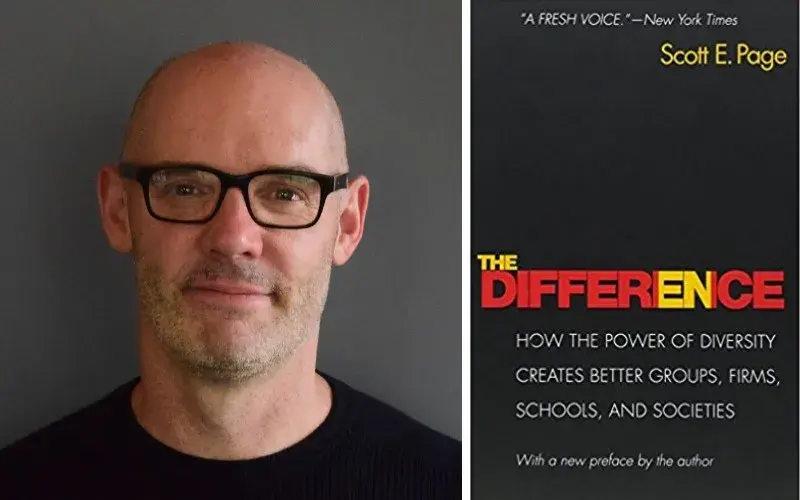
Scott Page: The Mathematical Foundation of Cognitive Diversity in Decision Making
In 2007, Scott E. Page — Professor of Complex Systems, Political Science, and Economics at the University of Michigan — published what became a landmark work in the science of group decision-making.
In The Difference: How the Power of Diversity Creates Better Groups, Firms, Schools, and Societies, Page set out to do something unusual for the field: he proved mathematically why cognitively diverse groups outperform groups of like-minded experts.
The argument was not intuitive. Conventional wisdom holds that the best team is assembled by selecting the best individuals. Page demonstrated that this logic breaks down whenever a problem has genuine complexity. When challenges are multi-dimensional — as most organisational decisions are — the critical variable is not the average ability of team members but the diversity of their cognitive approaches.
"Diversity yields superior outcomes"
— and Page proved it using his own cutting-edge research.
Scott E. Page, The Difference, Princeton University Press, 2007
His central insight was that groups improve predictions and decisions not because their members are smarter, but because their errors do not correlate. When people approach a problem from genuinely different cognitive frameworks, their mistakes are different mistakes — and different mistakes cancel each other out. A group of clones, however individually capable, amplifies shared errors rather than correcting them.
Page formalised this as the Diversity Prediction Theorem: the collective error of a diverse group is always less than the average individual error of its members, provided the members think differently enough. Diversity is not a social virtue bolted onto a meritocracy. It is a structural feature of intelligent systems.
The Diversity Bonus: Taking the Argument Further
In 2017, Page extended this work in The Diversity Bonus: How Great Teams Pay Off in the Knowledge Economy (Princeton University Press). Here he moved from the theoretical to the empirical, tracing a causal path to the tangible outcomes that emerge when people with varied cognitive repertoires work together on complex tasks.
Page introduced the concept of cognitive repertoires — the unique toolkit each person brings, comprising their information, knowledge, heuristics, representations, and mental models. The diversity bonus, he argued, arises specifically on complex, high-dimensional tasks: solving a problem, predicting an outcome, designing a policy, evaluating a proposed merger.

"Diversity bonuses, when they exist, do so on complex, high-dimensional tasks: solving a problem, predicting an outcome, designing a policy, evaluating a proposed merger, or undertaking research."
Scott E. Page, The Diversity Bonus, Princeton University Press, 2017, p. 2
A critical implication follows from Page's logic: assembling the highest-performing individuals by a single criterion will not produce the highest-performing team. Overlapping repertoires mean overlapping blind spots. The better team is often one whose members bring smaller but non-redundant toolkits — collectively covering territory that no individual could cover alone.
Page was also precise about where diversity does not help. On simple, routine tasks, cognitive homogeneity is often efficient. The bonus materialises on what he called cognitive nonroutine tasks — precisely the tasks that define strategic leadership.
Juliet Bourke: Mapping the Dimensions
Working independently, Dr Juliet Bourke was arriving at structurally identical conclusions through a different route entirely. Where Page approached the question through mathematics and complex systems theory, Bourke approached it through organisational behaviour, leadership research, and field study.
Her book Which Two Heads Are Better Than One? identified six distinct Dimensions of Approach (DoAs) that characterise how individuals and groups frame and solve problems: outcomes, options, people, process, evidence, and risk. Her field research found that leadership groups are routinely dominated by one or two of these approaches — most commonly outcomes and options — while the others receive far less attention than the complexity of the decisions actually demands.
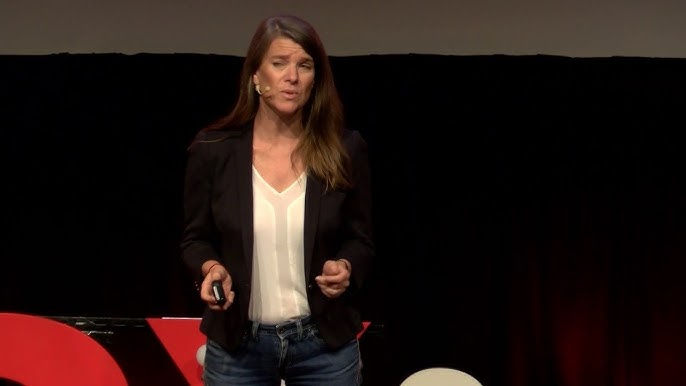
The cost of this imbalance is measurable. Bourke's research established that when groups approach problems with all six dimensions represented and weighted with reasonable equality, decision error rates fall by approximately 30%. Idea generation improves by 15–25%. Confidence in the resulting decision rises — among both participants and external stakeholders — and the likelihood of successful implementation increases.
Her work also identified why cognitive imbalance tends to compound over time. As leadership habits form, people naturally mirror the dominant thinking styles of those above them. Social bias, information bias, and capacity bias all push organisations toward the same narrowing. Achiever and Visionary profiles accumulate at the top. Evidence, process, and people perspectives get progressively underweighted. The organisation believes it is deciding well — and it is quietly replicating the same errors, cycle after cycle.

"Leadership groups are dominated by one or two approaches to group problem- solving, which leaders usually intuitively recognise as compromising performance."
Dr Juliet Bourke, Which Two Heads Are Better Than One? Where the Two Bodies of Work Meet
When Page published The Diversity Bonus in 2017, he did something that researchers rarely do: he explicitly incorporated Bourke's DoA framework — which she had first published in 2016 — into his own analysis.
He used it to examine a real and consequential business failure: McDonald's troubled investment in Chipotle between 1998 and 2006. His analysis found that the decision-making group had overweighted outcomes and options — two of Bourke's six dimensions — and given insufficient weight to the people dimension (Chipotle's supplier relationships and employee culture) and to process. The E. coli outbreaks of 2015 were, in this reading, the downstream consequence of a cognitively narrow decision group.
Page then made an explicit structural claim about Bourke's framework and its relationship to his own theory of complex decision-making:
"Strategic choices in more complex environments require teams because no one person could possibly cover all six dimensions."
Scott E. Page, The Diversity Bonus, Princeton University Press, 2017, pp. 120–121
This is not a passing citation. It is a scholar working in complex systems theory using an organisational researcher's framework as an analytical tool — and finding that it explains real-world outcomes with precision. Two independent lines of inquiry, built on different disciplines and different methods, had mapped the same territory.
Bourke herself noted this convergence directly in her book, writing that what Page found is "very similar" to her own research findings — and that they are, as she put it, "on the same page."
What This Means in Practice
The research establishes three things with confidence.
First, cognitive diversity is not a sentiment — it is a structural property of effective decision systems, with a quantifiable relationship to error rates, innovation capacity, and decision quality. Second, that diversity is not randomly distributed across organisations; it follows predictable patterns of concentration and depletion that can be mapped. Third, mapping alone is insufficient — the value of diversity is only realised when the right conditions exist to surface it, and when the right people are assembled for the specific decision at hand.
This is precisely what Wizer is built to operationalise.
Wizer's Decision Power Profiles draw on the same evidence base that Page and Bourke independently validated. The seven decision archetypes — Analyzer, Collaborator, Guardian, Explorer, Deliverer, Achiever, Visionary — represent the cognitive dimensions that research shows are essential to complete decision-making. No single archetype is sufficient. The power lies in understanding which are present, which are dominant, and which are missing.
Through Decision Profile Mapping, Panel Strength scoring, and a live recommendation engine, Wizer gives organisations the ability to see their own cognitive landscape — and to do something about it before a decision locks in.
The question Page and Bourke answered is: does cognitive diversity improve decisions? The answer, established across thirty years of independent scholarship, is yes — measurably, reliably, and significantly.
The question Wizer answers is: what does your organisation's cognitive landscape actually look like, and who should be in the room?
About Wizer
Wizer is a decision intelligence platform that helps organisations see how decisions are being shaped — by thinking styles, experience, and blind spots. Using Decision Profiles, Panel Strength, and a live recommendation engine, Wizer shows who is in the room, who is missing, and how decision groups can be strengthened. Visit wizer.business to learn more.

